Posted on

Meta Says Tech and Banking Giants Use Its AI

Meta Reports Strong AI Adoption Among Major Companies

Meta has announced that its AI models have been downloaded nearly 350 million times since last year. This figure is more than ten times the downloads recorded during the same period in 2023, with over 20 million downloads occurring in just the last month.

“The success of Llama is made possible through the power of open source. By making our Llama models openly available, we’ve seen a vibrant and diverse AI ecosystem emerge, offering developers greater choice and capability than ever before,” the company stated.

Meta noted that the use of its AI models through cloud providers such as Microsoft and Amazon Web Services has more than doubled between May and July. Notable companies that have adopted Llama include Goldman Sachs, Zoom, AT&T, DoorDash, and Shopify.

Business Impacts of AI Innovation

PYMNTS recently explored the significant impact of Meta’s Llama 3.1 on businesses, highlighting the balance companies must strike between accessing powerful, cost-free AI and addressing challenges related to implementation and security. Ilia Badeev, head of data science at Trevolution Group, emphasized that:

“These models can be utilized to communicate with customers and provide instant 24/7 assistance with simple inquiries that do not require human intervention.”

Experts like Mike Conover, CEO of Brightwave, predict a transformative shift in customer service, stating:

“If you think about the cost of intelligence effectively going to zero for customer relations, call centers will not exist in the future. AI systems will manage large volumes of customer inquiries in a meaningful and satisfactory way to end users.”

Meta’s Plans for AI Monetization

During a recent earnings call, CEO Mark Zuckerberg shared Meta’s future plans to leverage AI for revenue generation. He anticipates that AI will facilitate the creation of personalized ads:

“Advertisers will simply provide us with a business objective and a budget, and we’re going to take care of the rest for them,” he noted. “We’ll progress incrementally over time, but I believe this will become a significant development.”

For ongoing updates on AI advancements, subscribe to the daily AI Newsletter.

Subscribe Here

Related Articles:

Posted on

Meta Says Tech and Banking Giants Use Its AI

Meta Reports AI Adoption by Major Tech and Banking Giants

According to a recent announcement, Meta has revealed that its AI models have been downloaded nearly 350 million times since last year. This figure reflects an impressive increase, surpassing 10 times the downloads reported at the same time in 2023, with over 20 million downloads occurring just last month.

“The success of Llama is made possible through the power of open source. By making our Llama models openly available, we’ve seen a vibrant and diverse AI ecosystem come to life where developers have more choice and capability than ever before,” the company stated on its website.

The innovation within the AI landscape has been both broad and rapid, with startups and enterprises alike leveraging Llama for various applications, whether on-premises or through cloud providers. Notably, usage through cloud services, such as Microsoft and Amazon Web Services, has more than doubled in just a few months. Major firms like Goldman Sachs, Zoom, AT&T, DoorDash, and Shopify are now utilizing Llama.

In exploring the business implications of Meta’s Llama 3.1, experts note a potential transformation in customer interactions. “These models can be used to communicate with customers and provide instant 24/7 assistance with simple queries that do not require human intervention,” said Ilia Badeev, head of data science at Trevolution Group. He emphasized that large language models (LLMs) could personalize marketing campaigns and enhance recommendations for individual customers.

Moreover, industry observers anticipate significant changes in customer service. Mike Conover, CEO of Brightwave, remarked, “If you think about the cost of intelligence effectively going to zero over time for customer relations, call centers will not exist in the future.” He believes AI systems will effectively manage large volumes of customer inquiries satisfactorily.

In a quarterly earnings call, CEO Mark Zuckerberg elaborated on Meta’s strategy to monetize AI. He predicted that AI would eventually create personalized advertisements, allowing advertisers to set business objectives and budgets, while Meta’s AI would handle the implementation. “Advertisers will basically just be able to tell us a business objective and a budget, and we’re going to go do the rest for them,” Zuckerberg added.

For ongoing updates and insights on AI, consider subscribing to the daily AI Newsletter.

Posted on

New tool to advance hydropower plant cybersecurity through AI

Hydro Review

New Tool to Enhance Hydropower Plant Cybersecurity through AI

By Elizabeth Ingram – 8.29.2024

The saying is: A cyberattacker only needs one win, but a security team needs to win 100% of the time.

A new cybersecurity tool for hydropower plants is being developed at the National Renewable Energy Laboratory (NREL) to achieve a high level of protection. This data-driven and hardware-agnostic tool, known as the Cybersecurity Situational Awareness Tool for Hydropower (CYSAT-Hydro), comes amidst two key trends in the energy sector.

First, there’s a rapid increase in internet-connected distributed energy resources. These can integrate with larger generation sources, like hydroelectric plants, which poses cybersecurity risks for their digital interfaces on the grid. Secondly, notable cyberattacks, such as the May 2021 ransomware attack on the Colonial Pipeline, have highlighted the vulnerabilities within energy systems, costing operators millions and disrupting gas supply for many Americans.

Analyzing the Threat Landscape

Over the past 10 to 15 years, there has been a marked increase in malicious attacks targeting critical infrastructure, such as the power grid. According to Vivek Kumar Singh, a senior cybersecurity researcher at NREL, these threats are often sponsored by nation-states seeking significant impact and monetary gain.

Modernizing the U.S. power grid has been a priority, incorporating new technologies like smart meters and advanced communication systems. Hydropower plants are increasingly part of the smart grid trend, with operators linking small facilities to energy storage systems for reliable power supply.

However, these new technologies also create additional entry points for potential hackers. CYSAT-Hydro is designed to secure these vulnerabilities, actively ensuring the grid’s reliability.

The Need for Enhanced Protection

Cyber threats faced by the grid can be covert and require minimal knowledge to execute. Examples include denial-of-service attacks, which may involve easy access to basic system information. Specific threats targeting hydropower-integrated battery storage systems could encompass both unauthorized tripping of relays and tampering with regulation signals.

The CYSAT-Hydro tool specifically addresses these vectors, using AI to detect unusual activities within the operational technology networks. The system sends real-time alerts about attacks while also providing analytics to help operators restore grid functionality swiftly.

Singh emphasizes the potential financial losses caused by cyberattacks. “If an attack shut down a hydro plant for five hours, it might cost you a huge amount as the operator, affecting flood control and local ecosystems. This tool could help prevent such issues.”

User-Friendly Interface

CYSAT-Hydro features a user-friendly application programming interface compatible across different operating systems. It includes a visualization dashboard for comprehensive monitoring of grid operations, network traffic, and security breaches.

Being open source, CYSAT-Hydro can be easily adopted across various grid technologies and critical infrastructure sectors, such as water and gas pipelines.

As the tool approaches completion, Singh anticipates its adaptability will foster future growth. Plans for field demonstrations and further case studies are in discussion to enhance its effectiveness.

Conclusion

NREL, a national laboratory of the U.S. Department of Energy, is committed to advancing the state of cybersecurity in clean energy systems with initiatives like CYSAT-Hydro. By addressing the increasing threats in the energy domain, this new tool aims to safeguard essential services and promote a more resilient power infrastructure.

Posted on

Start working against deepfakes, Delhi HC tells Centre

Delhi High Court Urges Action Against Deepfakes

It is going to be a serious menace in society, says the bench.

Updated – August 28, 2024 08:39 pm IST

Published – August 28, 2024 08:21 pm IST – NEW DELHI:

The Hindu Bureau

The Delhi High Court articulated the need for immediate action against deepfakes, pointing to potential dangers they pose in society. The court emphasized that the Centre should “start working on this.”

“You [Centre] also start thinking about this. It [deepfake] is going to be a serious menace in society,” stated Acting Chief Justice Manmohan and Justice Tushar Rao Gedela while evaluating two petitions concerning the unregulated use of deepfake technology in India.

The Threat of Deepfakes

Deepfakes encompass images and videos manipulated through artificial intelligence (AI) that superimpose one person’s likeness onto another’s. The rise of this technology has sparked concerns about its misuse, including the spread of misinformation and the creation of fabricated narratives.

“What I see through my own eyes and what I have heard through my own ears, I don’t have to trust that, this is very, very shocking,” noted the court.

Among the petitions, one was filed by journalist Rajat Sharma, who criticized the lack of regulation surrounding deepfake technology and requested that public access to applications designed to create such content be blocked. The second petition was presented by lawyer Chaitanya Rohilla, highlighting concerns about the unregulated application of AI.

Next Steps

The court provided the petitioners with a two-week timeline to submit additional affidavits containing their recommendations and scheduled further hearings for October 24.

Additional Solicitor General Chetan Sharma, representing the Centre, acknowledged the pressing nature of the issue. He remarked, “We can employ counter AI technology to annul what would otherwise be a very damaging situation.” He outlined four necessary actions: detection, prevention, a grievance support mechanism, and raising awareness.

The Bench indicated that the remedy for AI-related issues would need to stem from technological solutions.

Read Comments

Posted on

In regulating AI, Texas lawmakers face balancing act between its bene…

TEXAS LEGISLATORS NAVIGATE THE COMPLEXITIES OF AI REGULATION

A Senate committee recently explored the intricacies of artificial intelligence (AI) during a nearly four-hour hearing, shedding light on Texas’s approach to regulating this rapidly advancing technology.

Concerns About AI

The Texas Senate Business and Commerce Committee highlighted concerns regarding the potential risks associated with AI, such as the dissemination of misinformation, biased decision-making, and infringements on consumer privacy. By the end of the hearing, some committee members concluded that Texas may need to implement regulations governing how private companies utilize AI technology.

Sen. Lois Kolkhorst, R-Brenham, emphasized the importance of safeguarding the public, stating, “If you really think about it, it’s a dystopian world we could live in. Our challenge is figuring out how to implement those safeguards.”

The Scope of Artificial Intelligence

Artificial intelligence encompasses various technologies, from chatbots that assist users through language processing to generative AI that creates original content. It can also automate decision-making processes, such as determining home insurance rates or evaluating job applicants. Additionally, AI is utilized to create digital replicas of artistic works.

According to Amanda Crawford, chief information officer for the Texas Department of Information Resources, over 100 of the 145 state agencies currently employ AI in some capacity. Crawford is part of the newly established AI Council, formed by Gov. Greg Abbott, Lt. Gov. Dan Patrick, and House Speaker Dade Phelan, to assess the use of AI in state agencies and evaluate the necessity of an ethical framework for AI applications. The council’s report is anticipated by the year’s end.

Impact on State Agencies

Leaders from various state agencies testified on the advantages of AI, noting significant time and cost savings. For instance, Edward Serna, executive director of the Texas Workforce Commission, shared that a chatbot implemented in 2020 has addressed 23 million inquiries. Likewise, Tina McLeod, information officer in the Attorney General’s Office, mentioned that their AI tool helps employees save at least an hour each week when managing lengthy child support cases.

However, some stakeholders raised concerns about potential negative impacts on Texans due to AI. Country singer Josh Abbott expressed worry that AI could replicate his voice for unauthorized song creations on platforms like Spotify, stating, “AI fakes don’t care if you’re famous. AI frauds and deep fakes affect everyone.”

The Call for Responsible AI Usage

Policy analyst Grace Gedye from Consumer Reports indicated that private companies have previously used biased AI models for crucial housing and employment decisions detrimental to consumers. She urged lawmakers to mandate audits for companies that rely on AI for decision-making processes, similar to New York City’s law requiring audits for automated employment tools, although the compliance rate has been low.

When crafting future legislation, officials must approach the matter delicately to avoid prohibiting beneficial AI applications while addressing associated risks, according to Renzo Soto, executive director of TechNet, which advocates for technology CEOs. “You almost have to look at it industry by industry.”

Texas has already enacted laws like the one in 2019 criminalizing misleading videos intended to influence elections and a 2023 law banning deep fake videos for pornographic purposes. As lawmakers contemplate future regulations, particular attention must be paid to First Amendment rights, as noted by attorney Ben Sheffner from the Motion Picture Association.

Throughout the hearing, legislators sought examples from other states and countries to inform their AI policy development. Currently, a patchwork of regulations at both state and federal levels attempts to manage AI usage but with limited success. California has proposed legislation that requires AI developers to mitigate “catastrophic harm” risks from their technologies, while Colorado has already passed regulations concerning AI usage in high-stakes areas like education, employment, and healthcare.

Upcoming Challenges and Developments

As discussions about AI regulation progress, it remains critical for Texas lawmakers to ensure they encourage innovation while protecting citizens from potential abuses of technology.

Get Your TribFest Tickets!

Don’t miss out on TribFest from September 5–7, featuring over 100 discussions with more than 300 speakers, including notable figures like Stacey Abrams, Colin Allred, and Nancy Pelosi. Secure your tickets now!

Support Independent Texas News

The Texas Tribune is committed to delivering fact-based journalism. Your support is essential to continue providing in-depth news and information. Consider making a donation to help sustain our nonprofit newsroom.

Posted on

AI alignment as responsible innovation

AI Alignment as Responsible Innovation
Author: Anulekha Nandi
Published on: August 27, 2024

AI alignment research aims to embed human values within AI development, necessitating ongoing vigilance due to diverse contexts and value systems.

Introduction
In recent years, significant shifts in AI alignment research have gained attention, especially following notable exits from OpenAI by co-founder John Schulman and researcher Jan Leike. Both joined Anthropic to deepen their focus on AI alignment, highlighting the rising concerns surrounding AI safety—issues that cannot be solely managed through legal frameworks.

The concept of AI alignment fundamentally refers to encoding human values to minimize potential harm from AI systems. This approach mandates an understanding of the broader social and contextual nuances in which these systems operate.

The Need for AI Alignment
The urgency for effective AI alignment is evident in various sectors like healthcare, where AI systems have erroneously suggested unsafe cancer treatments. Other areas facing similar challenges include AI-driven content moderation, the financial sector’s algorithm-driven trading, and criminal justice systems that rely on biased recidivism algorithms. As a result, it’s clear that AI alignment must ensure sustainable and ethical development across multiple domains.

AI alignment serves a crucial purpose: providing scalable oversight to address issues of misalignment, promote unbiased responses, ensure robustness in unpredictable situations, enhance interpretability, and uphold human control over AI systems.

Challenges of AI Alignment
Despite the straightforwardness of its principles, achieving alignment is notoriously complicated. The intricacies arise from diverse contexts, preferences, and societal sensitivities, coupled with the opaque nature of AI algorithms. This presents a persistent trade-off between transparency and interpretability, as well as computational performance.

Moreover, as AI capabilities evolve, they pose significant risks such as becoming overconfident or prone to hallucinations—emphasizing the necessity of continuous oversight. Methods like Reinforcement Learning from Human Feedback (RLHF) are still susceptible to biases, highlighting a growing need for vigilance in model training and evaluation.

Responsible Innovation
Responsible innovation in the context of AI entails a techno-institutional approach that emphasizes the continuous adjustment of technology to align with both organizational strategies and societal expectations. This foundation stresses collective responsibility for the outcomes generated from scientific and technological advancements.

To operationalize responsible innovation, systemic transformations are essential, which includes the establishment of comprehensive policies and processes integrated with technological safeguards.

Research indicates that understanding responsibility is more transparent when uncertainty about action impacts is low. For example, recognizing bias in hiring algorithms is a clear instance requiring remediation. Conversely, scenarios with high uncertainty—such as determining the limits of freedom of expression—demand more nuanced interventions to balance various concerns.

The complexity of AI development within multi-stakeholder ecosystems necessitates a clear understanding of accountability. Distributing responsibilities based on stakeholder roles supports both external congruency in norms and values and internal alignment with organizational capabilities—critical for sustainable initiatives.

Conclusion
AI alignment as responsible innovation emphasizes proactive engagement rather than reactive accountability. It encompasses anticipating, responding, and iteratively refining design choices. Such reactive measures help ensure AI systems reflect shared societal values while accommodating diverse stakeholder interests.

In conclusion, as AI systems continue to evolve, it is imperative to cultivate an ecosystem that embraces responsibility, reflective design, and inclusive practices to guide the development and deployment of AI technologies wisely.

Anulekha Nandi is a Fellow at the Observer Research Foundation, specializing in technology policy and digital innovation.

Related Tags: Artificial Intelligence, AI Alignment, Responsible Innovation, AI Safety

The views expressed above belong to the author(s).

Posted on

Pivotal moment for EU AI Act: Who will lead the GPAI code of practice?

Pivotal Moment for EU AI Regulation: Who Will Lead the GPAI Code of Practice?

Published on 26/08/2024 – 15:38 GMT+2 by Kai Zenner, Head of Office, MEP Axel Voss; Cornelia Kutterer, Managing Director, Considerati.

Within the next three weeks, the AI Office will likely appoint an essential group of external individuals that will shape the implementation of a key component of the EU AI Act: the chairs and vice-chairs of the Code of Practices for General-Purpose AI (GPAI) models.

“The (vice) chairs’ expertise and vision will be crucial in guiding GPAI rules for the future and ensuring that the European way to trustworthiness in the AI ecosystem will endure.”

Recent developments in generative AI, including popular applications like OpenAI’s ChatGPT, have brought both economic disruption and political challenges during the AI Act trilogue negotiations. Member states such as France, Germany, and Italy expressed concerns that regulatory initiatives at the foundational level of the AI stack might stifle EU start-ups like Mistral or Aleph Alpha. On the other hand, the European Parliament, worried about market concentration and potential fundamental rights violations, advocated for a comprehensive legal framework for generative AI, now described in the final law as GPAI models.

In response to these contrasting views, EU co-legislators chose a co-regulatory approach, defining the obligations of GPAI model providers through codes and technical standards. Commissioner Thierry Breton notably proposed this strategy, drawing from the 2022 Code of Practice on Disinformation.

While codes of practice can provide flexibility for the fast-evolving AI landscape, critics argue they may lead companies to commit only to minimum standards.

However, the AI Office has lessons to draw from past experiences, such as the review process of the original EU Code of Practice on Disinformation in 2018, which resulted in increased accountability through civil society involvement and the appointment of independent academics to lead discussions.

Technically Feasible and Innovation-Friendly

The AI Office plans to utilize this prior experience in the development of GPAI, proposing a robust governance system for drafting the Codes of Practice through four Working Groups. Multiple stakeholders will be invited to contribute, particularly via public consultations and plenary sessions. Notably, GPAI companies will have enhanced roles in the drafting process, being invited to additional workshops.

Although these codes will be voluntary, the AI Office should prioritize appointing chairs with strong technical and governance expertise related to GPAI models to ensure high-quality outcomes.

The appointed individuals will hold significant influence in drafting texts and chairing working groups. An additional coordinating chair could help balance ambitious regulatory rules with the need for technically feasible and innovation-friendly obligations.

A Choice of Paramount Importance

The selection process is intricate, as the field of AI safety is still developing and characterized by trial and error. The AI Office must balance diverse professional backgrounds and interests while adhering to EU standards for country and gender diversity. Given the global nature of AI, numerous esteemed international experts have expressed interest in these roles, adding to the complexity of ensuring strong EU representation.

Ultimately, the selection of (vice) chairs for the GPAI Code is crucial. Their leadership will shape the co-regulatory exercise as it addresses complex socio-technical challenges, including sensitive policies such as intellectual property rights and content moderation.

In conclusion, the upcoming appointments will play a pivotal role in determining the effectiveness and legitimacy of the GPAI Code and its alignment with EU values.

About the Authors:
Kai Zenner is the Head of Office and Digital Policy Adviser for MEP Axel Voss (Germany, EPP) and played a key role in the AI Act negotiations at the technical level. Cornelia Kutterer is Managing Director of Considerati, an adviser to SaferAI, and a researcher in AI at the University of Global Administrative.

Posted on

Jenna Ortega says she deleted Twitter after seeing explicit AI images of herself as a minor

Jenna Ortega Deletes Twitter After Encountering AI-Generated Explicit Images

Actress Jenna Ortega revealed that she removed her account from X, formerly known as Twitter, following a frightening incident involving AI-generated pornographic images of herself when she was underage.

In an interview with The New York Times, published on August 25, 2024, the 21-year-old actress shared her strong distaste for artificial intelligence. *”I hate A.I.,”* she stated. Although she acknowledged its potential for good, she expressed concern over its misuse.

*”Did I like being 14 and making a Twitter account because I was supposed to and seeing dirty edited content of me as a child? No,”* she remarked, describing the experience as *”terrifying, corrupt, and wrong.”*

Ortega recounted that at 12, the first direct message she opened on Twitter contained an unsolicited explicit image of a man. *”And that was just the beginning of what was to come,”* she said, emphasizing the overwhelming nature of the unwanted content following the release of her hit series *”Wednesday.”*

*”It was disgusting, and it made me feel bad,”* she stated. *”I thought, ‘Oh, I don’t need this anymore.’ So I dropped it.”*

Ortega’s experience reflects a larger issue of **nonconsensual AI-generated deepfakes**, which have become prevalent online. Research indicated that more explicit deepfake videos were uploaded in 2023 than in all previous years combined. Ortega is among the top 40 most-targeted female celebrities on major deepfake websites.

Earlier this year, the AI app called Perky AI misleadingly advertised its capability to undress women using altered images of Ortega at 16.

Additionally, actress Xochitl Gomez, known for her role in *”Doctor Strange in the Multiverse of Madness,”* reported that at 17, she discovered nonconsensual deepfakes of herself online. Similarly, singer Taylor Swift faced a wave of explicit deepfakes that led to significant reactions on social media platforms.

This issue is not confined to celebrities. Increasingly, teenage girls in the U.S. have become victims of fake nude content generated by AI. Despite some states introducing regulations, the legal landscape is inconsistent and often ineffective.

In one instance, a California middle school expelled five students for creating and sharing AI-generated nude images of classmates, raising alarm within the community.

Overall, Ortega’s story sheds light on the urgent need for better protections against the misuse of AI technology, particularly for vulnerable individuals.

Author: Angela Yang
Culture and Trends Reporter, NBC News

Posted on

AI’s insatiable energy demand is going nuclear

NEWS

  • Today’s news
  • US
  • Politics
  • World
  • Tech
    • Reviews and deals
    • Audio
    • Computing
    • Gaming
    • Health
    • Home
    • Phones
    • Science
    • TVs
  • Climate change
  • Health
  • Science
  • 2024 election
  • Originals
    • The 360

LIFE

  • Health
    • COVID-19
    • Fall allergies
    • Health news
    • Mental health
    • Relax
    • Sexual health
    • Studies
    • The Unwind
  • Parenting
    • Family health
    • So mini ways
  • Style and beauty
    • It Figures
    • Unapologetically
  • Horoscopes
  • Shopping
    • Buying guides
  • Food
  • Travel
  • Autos
  • Gift ideas
  • Buying guides

ENTERTAINMENT

  • Celebrity
  • TV
  • Movies
  • Music
  • How to Watch
  • Interviews
  • Videos
  • Shopping

FINANCE

  • My Portfolio
  • News
    • Latest News
    • Stock Market
    • Originals
    • Premium News
    • Economics
    • Housing
    • Earnings
    • Tech
    • Crypto
    • Biden Economy
  • Markets
    • Stocks: Most Actives
    • Stocks: Gainers
    • Stocks: Losers
    • Trending Tickers
    • Futures
    • World Indices
    • US Treasury Bonds Rates
    • Currencies
    • Crypto
    • Top ETFs
    • Top Mutual Funds
    • Options: Highest Open Interest
    • Options: Highest Implied Volatility
    • Sectors
    • Basic Materials
    • Communication Services
    • Consumer Cyclical
    • Consumer Defensive
    • Energy
    • Financial Services
    • Healthcare
    • Industrials
    • Real Estate
    • Technology
    • Utilities
  • Research
    • Screeners
    • Watchlists
    • Calendar
    • Stock Comparison
    • Advanced Chart
    • Currency Converter
    • Investment Ideas
    • Research Reports
  • Personal Finance
    • Credit Cards
    • Balance Transfer Cards
    • Cash-back Cards
    • Rewards Cards
    • Travel Cards
    • Credit Card Offers
    • Banking
    • CD Rates
    • Best HYSA
    • Best Free Checking
    • Student Loans
    • Personal Loans
    • Insurance
    • Car insurance
    • Mortgages
    • Mortgage Refinancing
    • Mortgage Calculator
    • Taxes
  • Videos
    • Morning Brief
    • Catalysts
    • Wealth
    • Market Domination
    • Market Domination Overtime
    • Asking for a Trend
    • Opening Bid
    • Stocks in Translation
    • NEXT
    • Lead This Way
    • Good Buy or Goodbye?
    • ETF Report
    • Financial Freestyle
    • Capitol Gains

SPORTS

  • Fantasy
    • News
    • Fantasy football
    • Best Ball
    • Pro Pick ‘Em
    • College Pick ‘Em
    • Fantasy baseball
    • Fantasy hockey
    • Fantasy basketball
    • Download the app
  • Daily fantasy
  • NFL
    • News
    • Scores and schedules
    • Standings
    • Stats
    • Teams
    • Players
    • Drafts
    • Injuries
    • Odds
    • Super Bowl
    • GameChannel
    • Videos
  • MLB
    • News
    • Scores and schedules
    • Standings
    • Stats
    • Teams
    • Players
    • Odds
    • Videos
    • World Baseball Classic
  • NBA
    • News
    • Draft
    • Scores and schedules
    • Standings
    • Stats
    • Teams
    • Players
    • Injuries
    • Videos
    • Odds
    • Playoffs
  • NHL
    • News
    • Scores and schedules
    • Standings
    • Stats
    • Teams
    • Players
    • Odds
    • Playoffs
  • Soccer
    • News
    • Scores and schedules
    • Premier League
    • MLS
    • NWSL
    • Liga MX
    • CONCACAF League
    • Champions League
    • La Liga
    • Serie A
    • Bundesliga
    • Ligue 1
    • World Cup
  • College football
    • News
    • Scores and schedules
    • Standings
    • Rankings
    • Stats
    • Teams
  • Show all
    • MMA
    • WNBA
    • Sportsbook
    • NCAAF
    • Tennis
    • Golf
    • NASCAR
    • NCAAB
    • NCAAW
    • Boxing
    • USFL
    • Cycling
    • Motorsports
    • Olympics
    • Horse racing
    • GameChannel
    • Rivals
    • Newsletters
    • Podcasts
    • Videos
    • RSS
    • Jobs
    • Help
    • World Cup
    • More news

NEW ON YAHOO

  • Games
  • Tech

TERMS

  • Privacy
  • Your Privacy Choices Privacy Choices
  • Feedback

© 2024 All rights reserved. About our ads Advertising Careers YAHOO FINANCE

Yahoo Finance Search query Select edition

  • USEnglish
  • US y LATAMEspañol
  • AustraliaEnglish
  • CanadaEnglish
  • CanadaFrançais
  • DeutschlandDeutsch
  • FranceFrançais
  • 香港繁中
  • MalaysiaEnglish
  • New ZealandEnglish
  • SingaporeEnglish
  • 台灣繁中
  • UKEnglish

News

  • Finance
  • Sports
  • More
    • News
    • Today’s news
      • US
      • Politics
      • World
      • Weather
      • Climate change
      • Health
      • Science
      • 2024 election
      • Originals
    • Life
      • Health
      • Parenting
      • Style and beauty
      • Horoscopes
      • Shopping
      • Food
      • Travel
      • Autos
      • Gift ideas
      • Buying guides
    • Entertainment
      • Celebrity
      • TV
      • Movies
      • Music
      • How to watch
      • Interviews
      • Videos
      • Shopping
    • Finance
      • My portfolio
      • Watchlists
      • Markets
      • News
      • Videos
      • Screeners
      • Personal finance
      • Crypto
      • Industries
    • Sports
      • Fantasy
      • NFL
      • NBA
      • MLB
      • NHL
      • College football
      • College basketball
      • Soccer
      • MMA
      • Yahoo Sports AM

Mail Sign in

  • My Portfolio
  • News
    • Latest News
    • Stock Market
    • Originals
    • Premium News
    • Economics
    • Housing
    • Earnings
    • Tech
    • Crypto
    • Biden Economy
  • Markets
    • Stocks: Most Actives
    • Stocks: Gainers
    • Stocks: Losers
    • Trending Tickers
    • Futures
    • World Indices
    • US Treasury Bonds Rates
    • Currencies
    • Crypto
    • Top ETFs
    • Top Mutual Funds
    • Options: Highest Open Interest
    • Options: Highest Implied Volatility
    • Sectors
    • Basic Materials
    • Communication Services
    • Consumer Cyclical
    • Consumer Defensive
    • Energy
    • Financial Services
    • Healthcare
    • Industrials
    • Real Estate
    • Technology
    • Utilities
  • Research
    • Screeners
    • Watchlists
    • Calendar
    • Stock Comparison
    • Advanced Chart
    • Currency Converter
    • Investment Ideas
    • Research Reports
  • Personal Finance
    • Credit Cards
    • Balance Transfer Cards
    • Cash-back Cards
    • Rewards Cards
    • Travel Cards
    • Credit Card Offers
    • Banking
    • CD Rates
    • Best HYSA
    • Best Free Checking
    • Student Loans
    • Personal Loans
    • Insurance
    • Car insurance
    • Mortgages
    • Mortgage Refinancing
    • Mortgage Calculator
    • Taxes
  • Videos
    • Morning Brief
    • Catalysts
    • Wealth
    • Market Domination
    • Market Domination Overtime
    • Asking for a Trend
    • Opening Bid
    • Stocks in Translation
    • NEXT
    • Lead This Way
    • Good Buy or Goodbye?
    • ETF Report
    • Financial Freestyle
    • Capitol Gains

…

Back to classic Read full article

Yahoo Finance | finance.yahoo.com

AI’S INSATIABLE ENERGY DEMAND IS GOING NUCLEAR

By Rachelle Akuffo

Sun, Aug 25, 2024, 10:32 AM | 7 min read

Amazon (AMZN) is ubiquitous in today’s world, not just for being one of the biggest and most established online marketplaces but also for being among the largest data center providers.

What Amazon is far less known for is being the owner and operator of nuclear power plants.

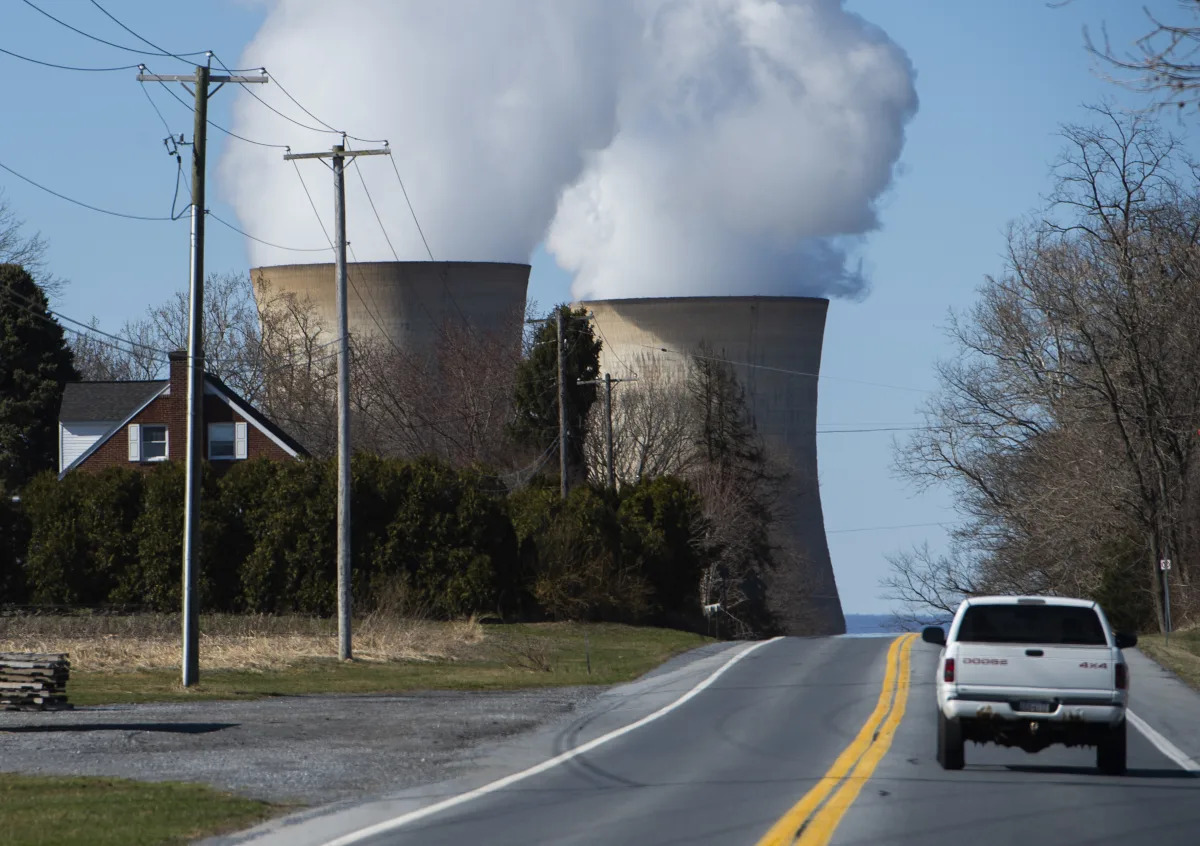
Yet that’s exactly what its cloud subsidiary, AWS, did in March, purchasing a $650 million nuclear-powered data center from Talen Energy in Pennsylvania.

On the surface, the deal indicates Amazon’s ambitious expansion plans. But dig deeper, and the company’s purchase of a nuclear power facility speaks to a broader issue that Amazon and other tech giants are grappling with: the insatiable demand for energy from artificial intelligence.

[IMAGE]

In Amazon’s case, AWS purchased Talen Energy’s Pennsylvania nuclear-powered data center to co-locate its rapidly expanding AI data center next to a power source, keeping up with the energy demands that artificial intelligence has created.

The strategy is a symptom of an energy reckoning that has been building as AI has been creeping into consumers’ daily lives — powering everything from internet searches to smart devices and cars.

Companies like Google (GOOG), Apple (AAPL), and Tesla (TSLA) continue to enhance AI capabilities with new products and services. Each AI task requires vast computational power, which translates into substantial electricity consumption through energy-hungry data centers.

Estimates suggest that by 2027, global AI-related electricity consumption could rise by 64%, reaching up to 134 terawatt hours annually — or the equivalent of the electricity usage of countries like the Netherlands or Sweden.

This raises a critical question: How are Big Tech companies addressing the energy demands that their future AI innovations will require?

[IMAGE]

The rising energy consumption of AI is significant. According to Pew Research, more than half of Americans interact with AI at least once a day.

Prominent researcher and data scientist Sasha Luccioni, who serves as the AI and climate lead at Hugging Face, often discusses AI’s energy consumption.

Luccioni explained that while training AI models is energy-intensive — training the GPT-3 model, for example, used about 1,300 megawatt-hours of electricity — it typically only happens once. However, the inference phase, where models generate responses, can require even more energy due to the sheer volume of queries.

For example, when a user asks AI models like ChatGPT a question, it involves sending a request to a data center, where powerful processors generate a response. This process, though quick, uses approximately 10 times more energy than a typical Google search.

[IMAGE]

Luccioni observed, “The models get used so many times, and it really adds up quickly.” She noted that depending on the size of the model, 50 million to 200 million queries can consume as much energy as training the model itself.

“ChatGPT gets 10 million users a day,” Luccioni said. “So within 20 days, you have reached that ‘ginormous’ … amount of energy used for training via deploying the model.”

The largest consumers of this energy are Big Tech companies, known as hyperscalers, that have the capacity to scale AI efforts rapidly with their cloud services. Microsoft (MSFT), Alphabet, Meta (META), and Amazon alone are projected to spend $189 billion on AI in 2024.

As AI-driven energy consumption grows, it puts additional strain on the already overburdened energy grids. Goldman Sachs projects that by 2030, global data center power demand will grow by 160% and could account for 8% of total electricity demand in the US, up from 3% in 2022.

This strain is compounded by aging infrastructure and the push toward the electrification of cars and manufacturing in the US. According to the Department of Energy, 70% of US transmission lines are nearing the end of their typical 50- to 80-year life cycle, increasing the risk of outages and cyberattacks.

[IMAGE]

Moreover, renewable energy sources are struggling to keep pace.

Luccioni pointed out that grid operators are extending the use of coal-powered plants to meet the rising energy needs, even as renewable energy generation expands.

AI UPENDS BIG TECH SUSTAINABILITY PLEDGES

Microsoft and Google have acknowledged in their sustainability reports that AI has hindered their ability to meet climate targets. For instance, Microsoft’s carbon emissions have increased by 29% since 2020 due to AI-related data center construction.

Still, renewable energy remains a crucial part of Big Tech’s strategies, even if it cannot meet all of AI’s energy demands.

In May 2024, Microsoft signed the largest corporate power purchasing agreement on record with property and asset management giant Brookfield to deliver over 10.5 gigawatts of new renewable power capacity globally through wind, solar, and other carbon-free energy generation technologies. Additionally, the company has invested heavily in carbon removal efforts to offset an industry-record 8.2 million tons of emissions.

Amazon has also made significant investments in renewable energy, positioning itself as the world’s largest corporate purchaser of renewable energy for the fourth consecutive year. The company’s portfolio now includes enough wind and solar power to supply 7.2 million US homes annually.

However, as Yahoo Finance reporter Ines Ferre noted, “The issue with renewables is that at certain times of the day, you have to also go into energy storage because you may not be using that energy at that time of the day.”

[IMAGE]

Beyond sourcing cleaner energy, Big Tech is also investing in efficiency. Luccioni said companies like Google are now developing AI-specific chips, such as the Tensor Processing Unit (TPU), that are optimized for AI tasks instead of using graphical processing units (GPUs), which were created for gaming technology.

Nvidia claims that its latest Blackwell GPUs can reduce AI model energy use and costs by up to 25 times compared to earlier versions.

[IMAGE]

In order to more accurately gauge energy demands and reduce future costs, experts say transparency is key.

“We need more regulation, especially around transparency,” said Luccioni, who is working on an AI energy star-rating project that aims to help developers and users choose more energy-efficient models by benchmarking their energy consumption.

When it comes to tech companies’ priorities, always follow the money, or in this case, the investments. Utility companies and tech giants are expected to spend $1 trillion on AI in the coming years.

But according to Luccioni, AI might not just be the problem — it could also be part of the solution for addressing this energy crunch.

“AI can definitely be part of the solution,” Luccioni said. “Knowing, for example, when a … hydroelectric dam might need fixing, [and the] same thing with the aging infrastructure, like cables, fixing leaks. A lot of energy actually gets lost during transmission and during storage. So AI can be used to either predict or fix [it] in real-time.”

Click here for the latest technology news that will impact the stock market

Read the latest financial and business news from Yahoo Finance

View comments

Advertisement

Copyright © 2024 Yahoo. All rights reserved.

[IMAGE] Dow Jones | S&P 500 | DAX Index | Nvidia | Tesla | DJT

EXPLORE MORE

Data Disclaimer

Help

Feedback

Terms | Privacy Policy | Your Privacy Choices Privacy Choices

Feedback

Posted on

China’s AI apps eye overseas markets amid tough competition, regulation at home

Chinese AI Apps Target Overseas Markets for Growth Amid Domestic Challenges

Introduction

Chinese artificial intelligence (AI) app developers are increasingly focusing on international users due to the highly competitive domestic market, industry insiders report.

Market Dynamics

While major tech firms and start-ups in China have been eager to release numerous large language models (LLMs) and associated applications, convincing local users to invest in these services has proven difficult. As a result, many companies are exploring opportunities abroad for expansion.

Research from Unique Capital highlights that, out of 1,500 active AI firms worldwide, 103 originate from China and are now actively seeking to enter foreign markets.

Examples of Expansion

Alibaba Group Holding has introduced SeaLLMs, specially designed for Southeast Asian markets, seamlessly integrating with its e-commerce and cloud computing operations in the region. Notably, Alibaba owns the South China Morning Post.

Another example is ByteDance, the parent company of TikTok, which has launched consumer-oriented applications such as the “AI homework helper” Gauth and the interactive character app AnyDoor, along with the AI bot platform Coze targeting global users. Additionally, Minimax, a prominent Chinese AI start-up, has debuted Talkie AI for the international market.

Industry experts suggest that overseas markets present more substantial growth prospects amid fierce domestic competition.

Insights from Industry Leaders

“Foreign users tend to be more willing to pay for software and there’s a larger pool of professionals who can provide valuable feedback,” stated Ryan Zhang Haoran, co-founder of Motiff. This company, known for its AI-powered user interface design tool launched in June, has been pursuing business opportunities both at home and globally from its inception.

Zhang remarked, “Utility-focused tools are favorable in international markets where customization demands are typically lower.” Motiff’s platform, which promotes team collaboration and AI-assisted design and generation, has successfully attracted its first users in the US, Japan, Southeast Asia, and Latin America, pricing its services at approximately 20% lower than current market leader Figma.

Beijing-based Kunlun Tech, which operates the Opera web browser and previously owned the gay dating app Grindr, is also actively expanding overseas. CEO Fang Han mentioned that competition abroad has intensified as more Chinese companies enter the global market.

“AI-generated content (AIGC) fundamentally reduces the barriers and costs for creators, disrupting the content industry,” Fang observed. Recently, Kunlun unveiled several AI-driven applications, including the music streaming service Melodio, the commercial music creation platform Mureka, and SkyReels, a platform for generating short-form dramas.

Fang shared, “We’re concentrating on markets with higher average revenue per user, such as North America, Europe, and Japan.”

Navigating Political Challenges

The growing tech rift, driven by tensions between Washington and Beijing, has compelled Chinese developers to navigate a complex political landscape, particularly in semiconductors and AI.

In response to these challenges, some Chinese companies have attempted to obscure their origins. Shenzhen-based generative AI start-up HeyGen moved its headquarters to Los Angeles and encouraged its Chinese investors to divest in favor of American ones to distance itself from mainland China amidst increasing scrutiny from both governments.

“Compliance is essential. Entering a new market requires adherence to its regulations,” noted Zhang from Motiff. He emphasized that while the company’s products remain consistent worldwide, their infrastructures are adapted for different markets through various open-source models and cloud services.

Fang indicated that while Kunlun’s domestic offerings prioritize “efficiency,” the team explores innovative AIGC tools and business models for its international applications. For instance, the Mureka app allows users to pay for access to AIGC tools and list AI-generated music for sale, with the platform earning a commission on each sale.

Despite facing challenges in areas such as chip development and computing power, Fang affirmed that Chinese companies excel in crafting consumer-oriented applications and possess a strong commercial acumen.